 Club
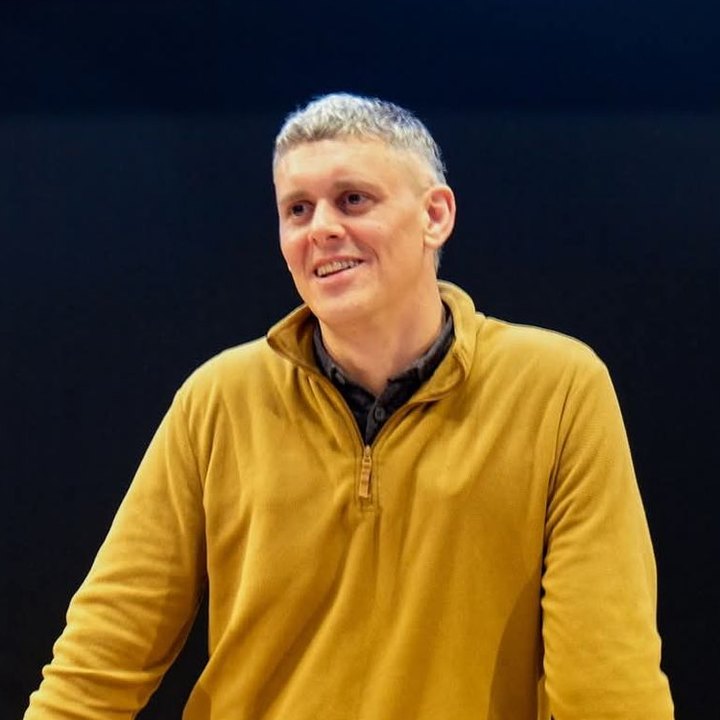
Hi, I'm Peter. I've helped build research robots for a living, delivered robot coding masterclasses across the UK, and now I teach AI game coding online.
I'm a Computer Science and AI honours graduate with a background in electronics engineering, robotics and AI research project management and more than ten years of delivering STE(A)M education masterclasses.
More about my work, research and projects at peterbrewer.co.uk.
The story so far
I've delivered coding and robotics sessions everywhere from primary schools to university level: outreach programmes with the University of Birmingham, holiday workshops at the Royal Institution of Great Britain, masterclasses for secondary schools, home-education groups and alternative provision, and STE(A)M organisations across the country.
Before moving online, Club Coders (formerly Robot Coders) was a hands-on club where young people built and coded robots, flew and repaired drones and programmed simple games. The best moments were always the same: that lightbulb moment - understanding, getting something to work, then immediately wanting to make it better.
Robotics is advancing rapidly, and so is AI. I want to be able to teach with the latest technology with the widest reach I can. Coding online means real code from day one, and access to the latest AI and coding technology to create truly immersive environments only limited by imagination. So I built the games - 3D multiplayer games I wrote for the club: a physics arena, motion-captured players with real and codable adversaries to play with and against. Lessons and missions are built into the games, which run on a UK class server I look after.
Why 13–17, and why games?
Thirteen is when "coding for kids" stops working. Children at this age don't want drag-and-drop blocks and cartoon cats. They want to make something that looks like the games they play, and they're more than capable of learning real Python to do it. Games are the perfect vehicle: every concept in a programming course has a visible, immediate use when you're building one, and the motivation to fix a bug is very different when the bug is in your own game.
Why AI?
Because I've spent my career in it, and because the gap between children who use AI and children who can direct and check it is going to matter enormously. In the club they write game AI themselves first (the brain that drives their robot), then learn to use generative AI the way exam boards now require: a precise request, a test, a review, and a credit. I run every request myself; nothing goes into the game that an adult hasn't checked.
What I believe about teaching
- Make something that works within the first hour. Theory lands better after you've seen it applied and solved the problems.
- Mistakes are the curriculum. Build, break, fix, repeat.
- Small groups or nothing. A small group is what I can genuinely lead, hear and help in 75 minutes.
- Everyone is welcome and everyone is supported. I've worked with neurodivergent learners for many years; structure and inclusion go a long way.
- Parents are partners. You'll always know what we did and why.
Beyond the club
Alongside Club Coders I run SharedArea.org, a charity working to make education more accessible for everyone. I also deliver coding and AI workshops and CPD for schools and educators; if you're a teacher who'd like to talk about a session or a partnership, get in touch.
Trusted by organisations that take education seriously.
The Royal Institution
Robotics & AI holiday workshops.
University of Birmingham
Outreach programmes and robotics research.
Schools & home-ed groups
Masterclasses across primary and secondary, plus alternative provision.
STE(A)M organisations
Outreach sessions and events across the UK.
Come and meet me at a free taster.
Sixty minutes. Your child builds a game. You see how I teach.